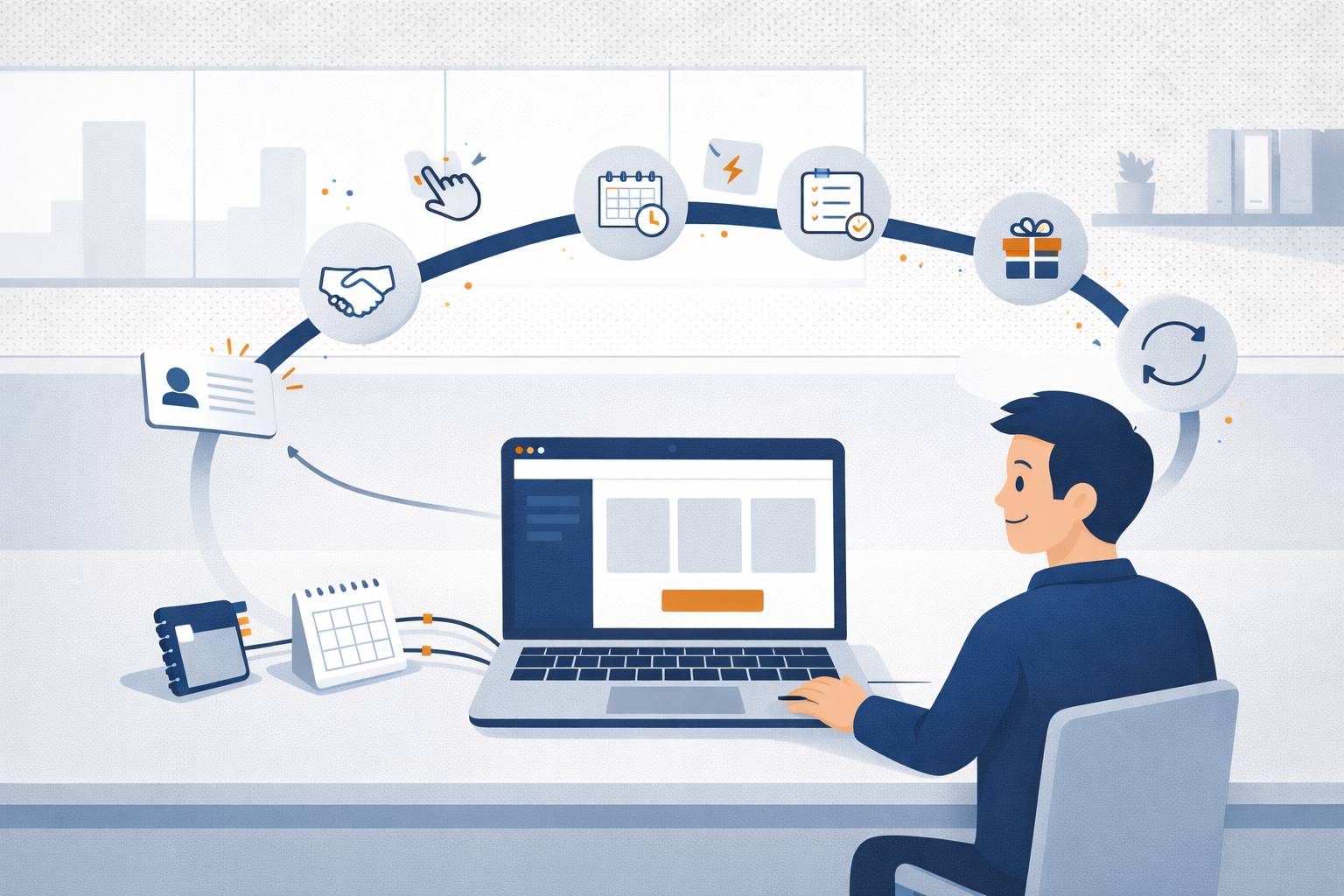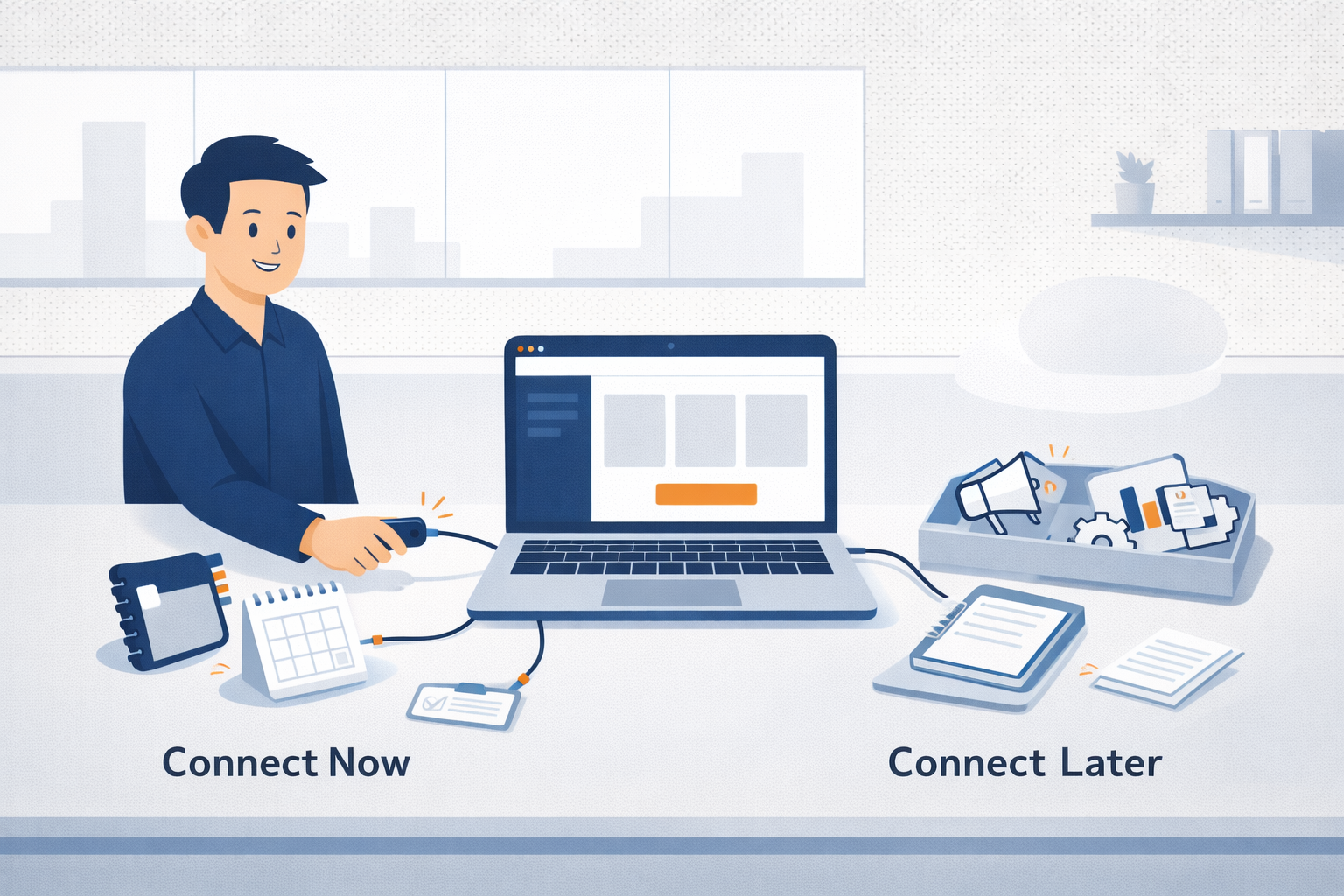
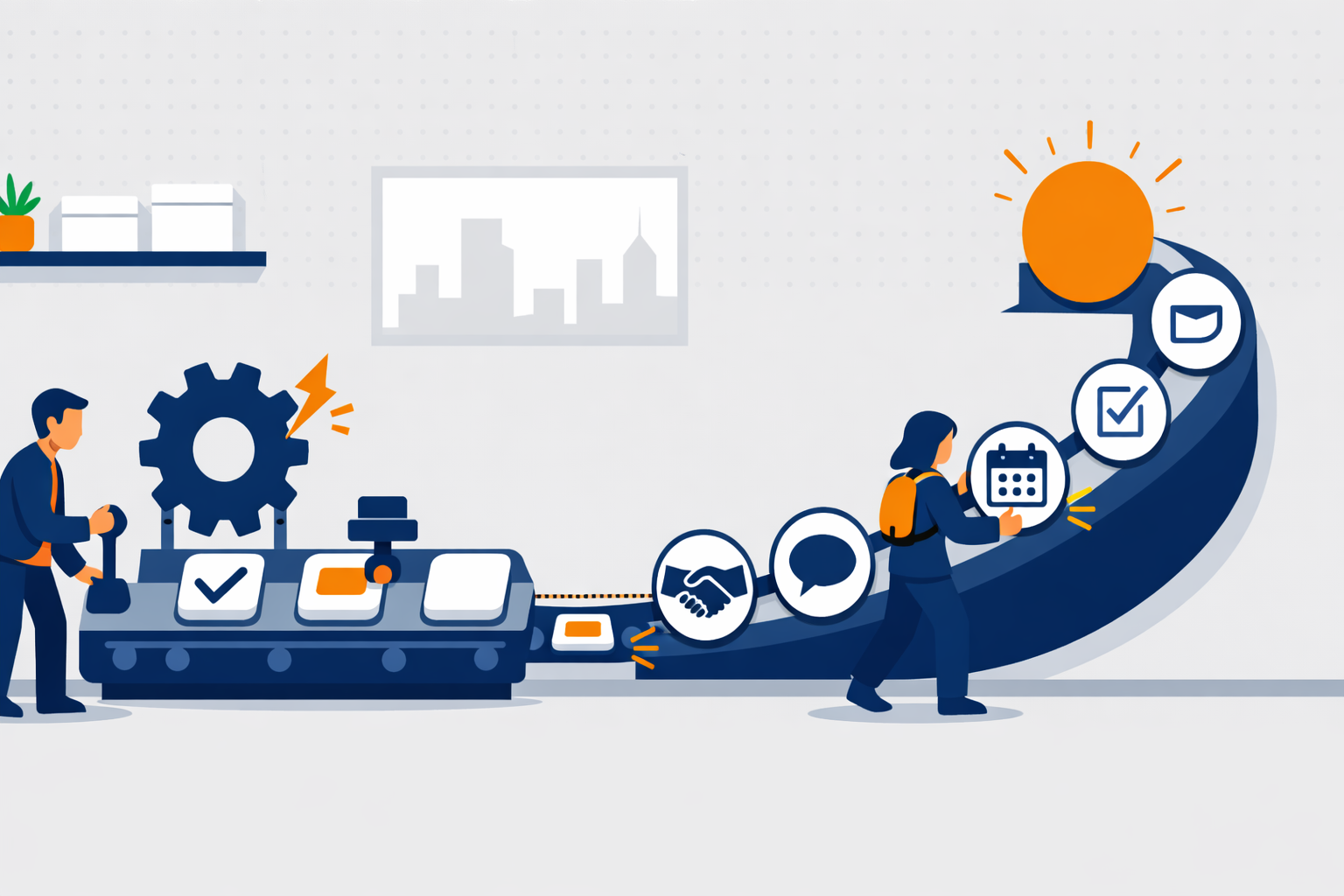
Automations handle the small stuff. Journeys guide the big picture.
These two terms are often confused because they work together. But they are not the same thing.
If you mix them up, systems get messy fast — because you end up using the wrong tool for the job.
An automation is a single action that happens automatically.
It usually follows a simple rule: If this happens… then do that.
Automations reduce tiny manual work that shouldn’t require brainpower.
A Journey is a path — a sequence of steps over time.
Journeys guide relationships from Point A to Point Z. They create structure, rhythm, and consistency.
If automations are individual bricks, a Journey is the full building.
Journeys are not just “messages.” They can include timing, tasks, reminders, outreach, checkpoints, and decision points.
Here’s the simplest way to remember the difference.
A single thing that happens automatically so you don’t have to do it manually.
A structured flow that guides the relationship forward across time.
Journeys and automations are meant to work together.
Journeys provide the plan. Automations support the plan.
Think of it like this:
Journeys keep relationships moving forward. Automations prevent the small steps from being forgotten.
In Segwik, Journeys are the relationship operating system. They organize the full sequence of what should happen next.
Automations in Segwik handle the supporting details: reminders, tasks, nudges, updates, and follow-through.
Imagine you want to stay connected with someone you just met.
A Journey might include:
Automations inside that Journey might handle:
Which parts of your follow-up process should be automated — and which parts should stay human?
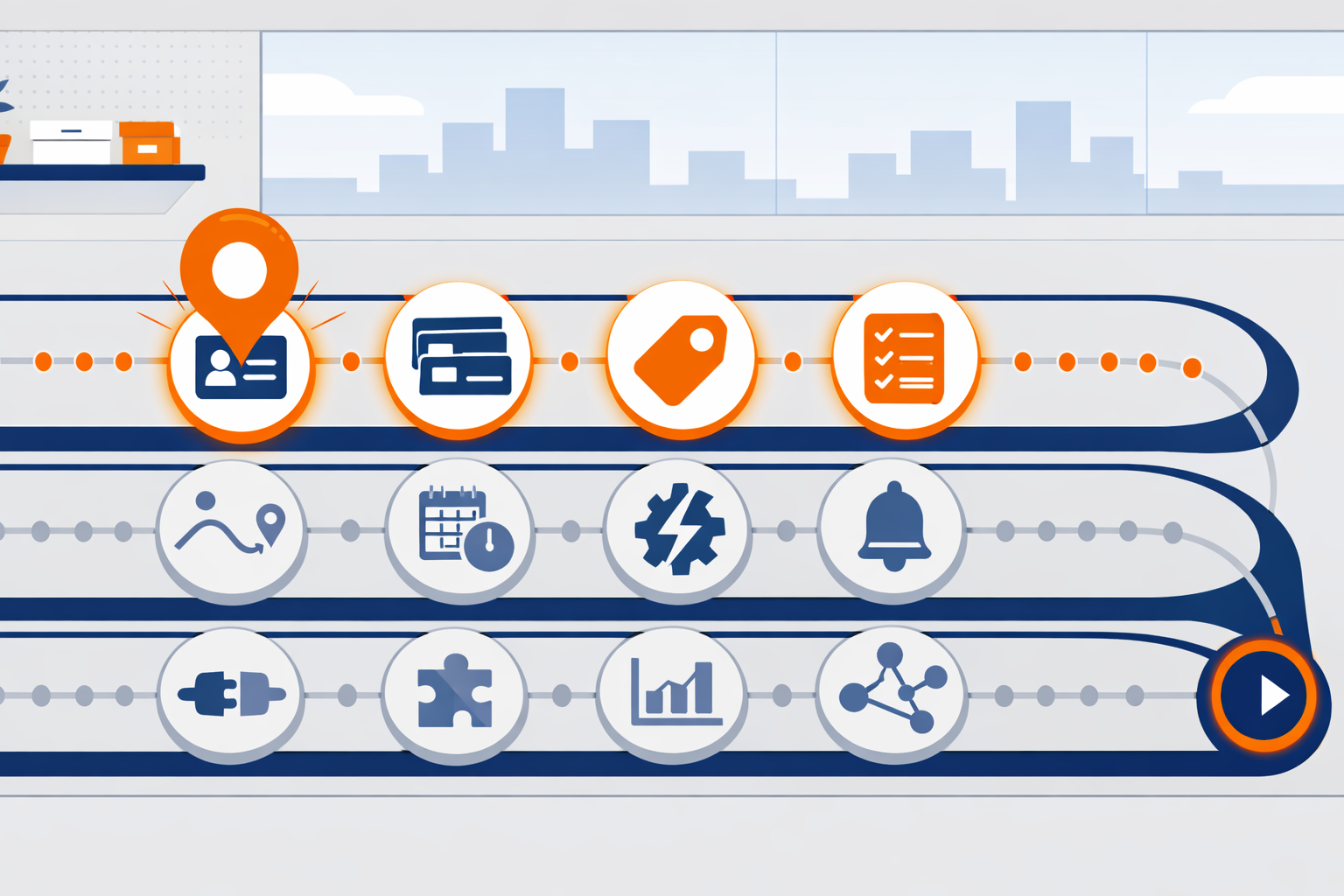
If you’re ever unsure what to do next, the Roadmap is your answer.
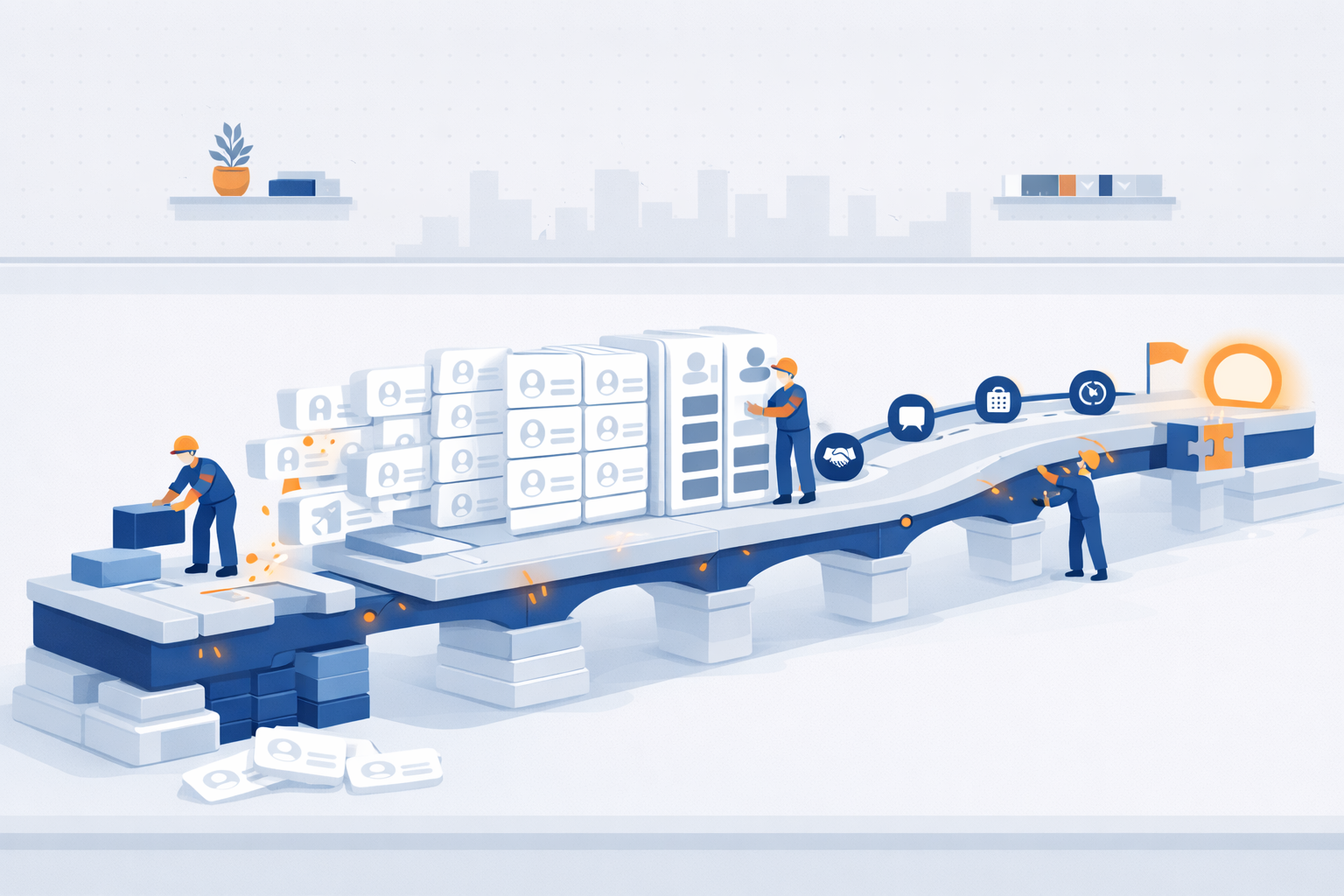
If you use Segwik consistently for one month, you stop relying on memory. You stop losing track of people. You stop wondering what to do next.
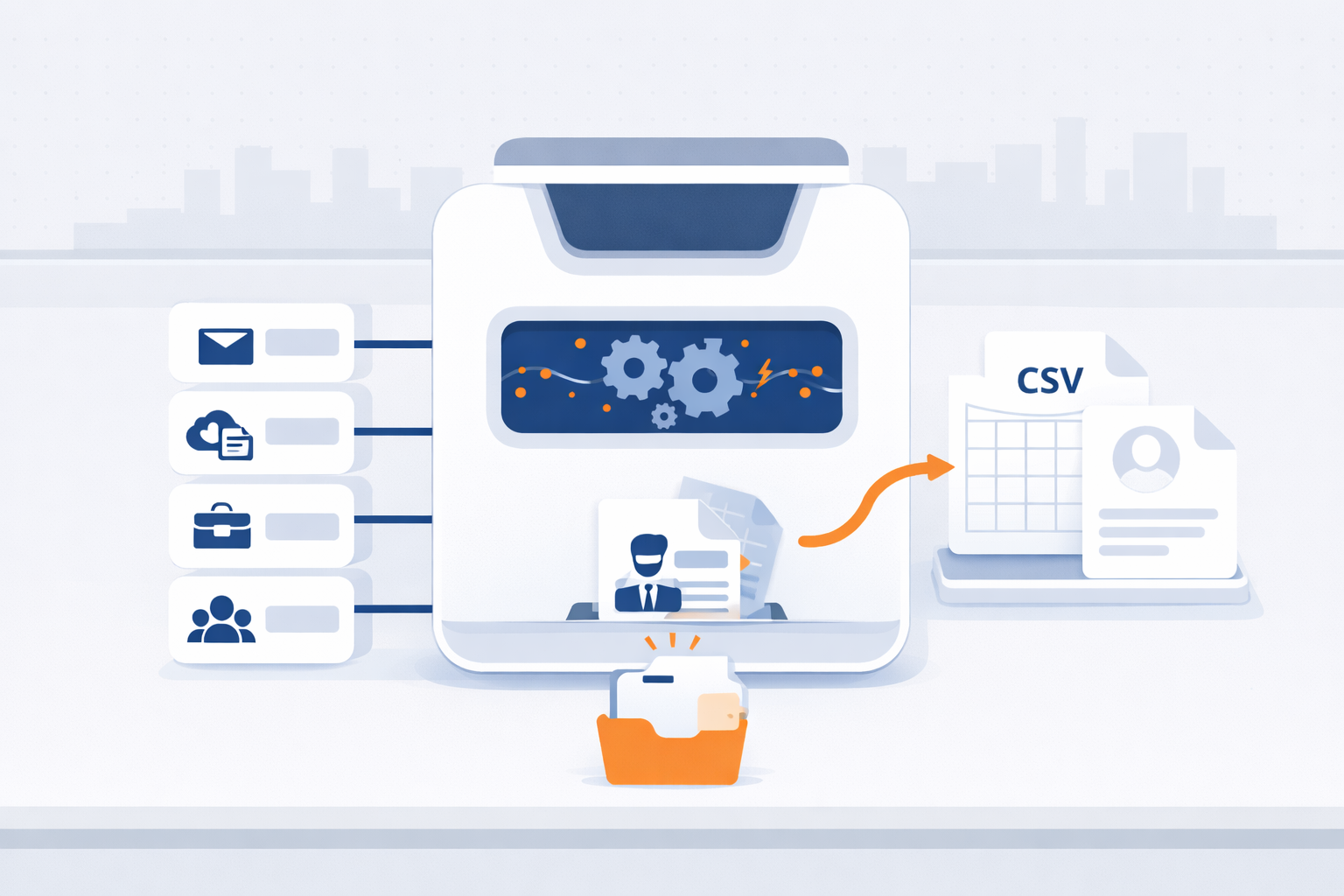
Export your contacts from Gmail, iCloud, Outlook, or Mailchimp in minutes—so you can bring them into Segwik quickly and stay organized.
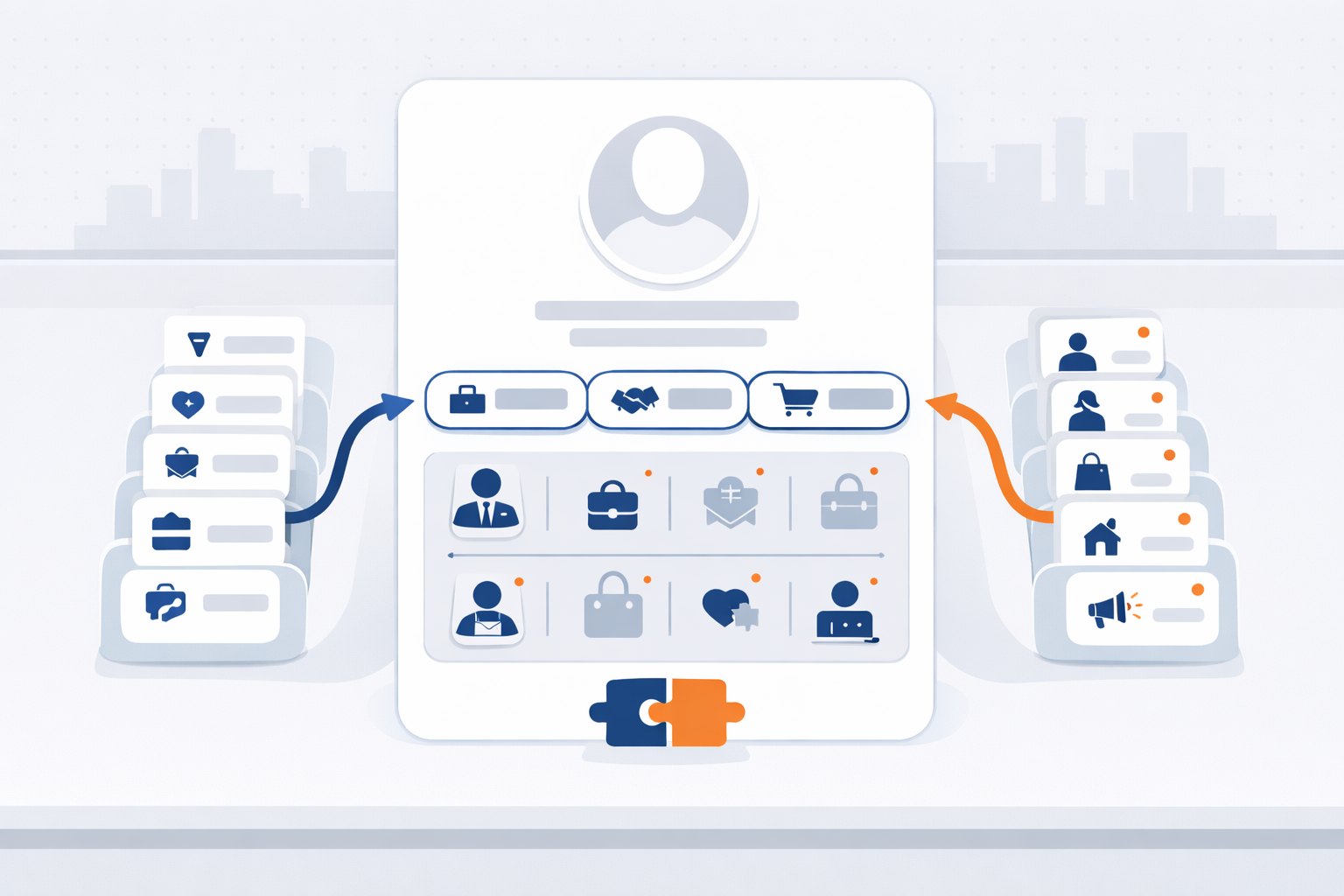
Contact Types and Personas help Segwik understand both your relationship to someone and who they are in your world.
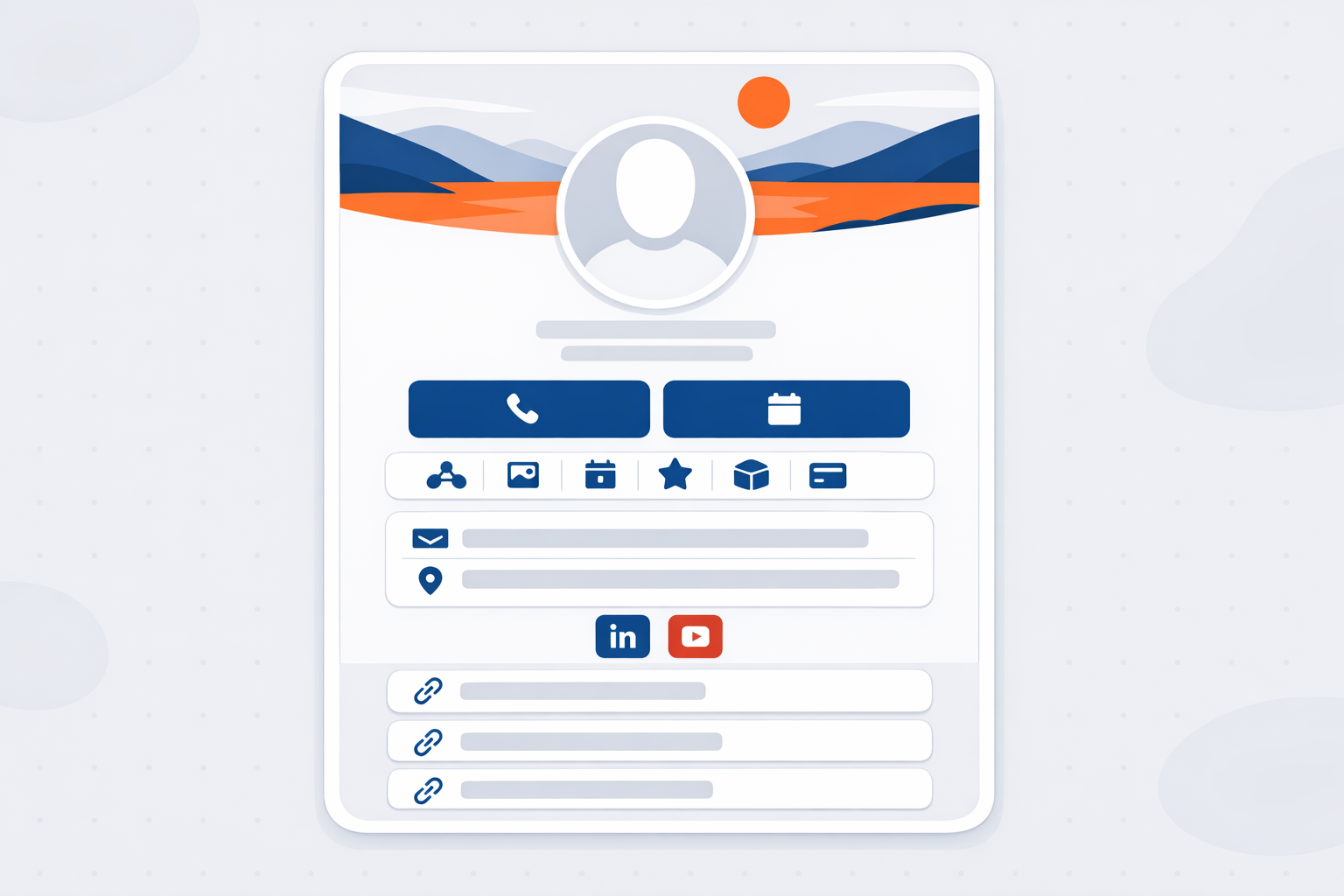
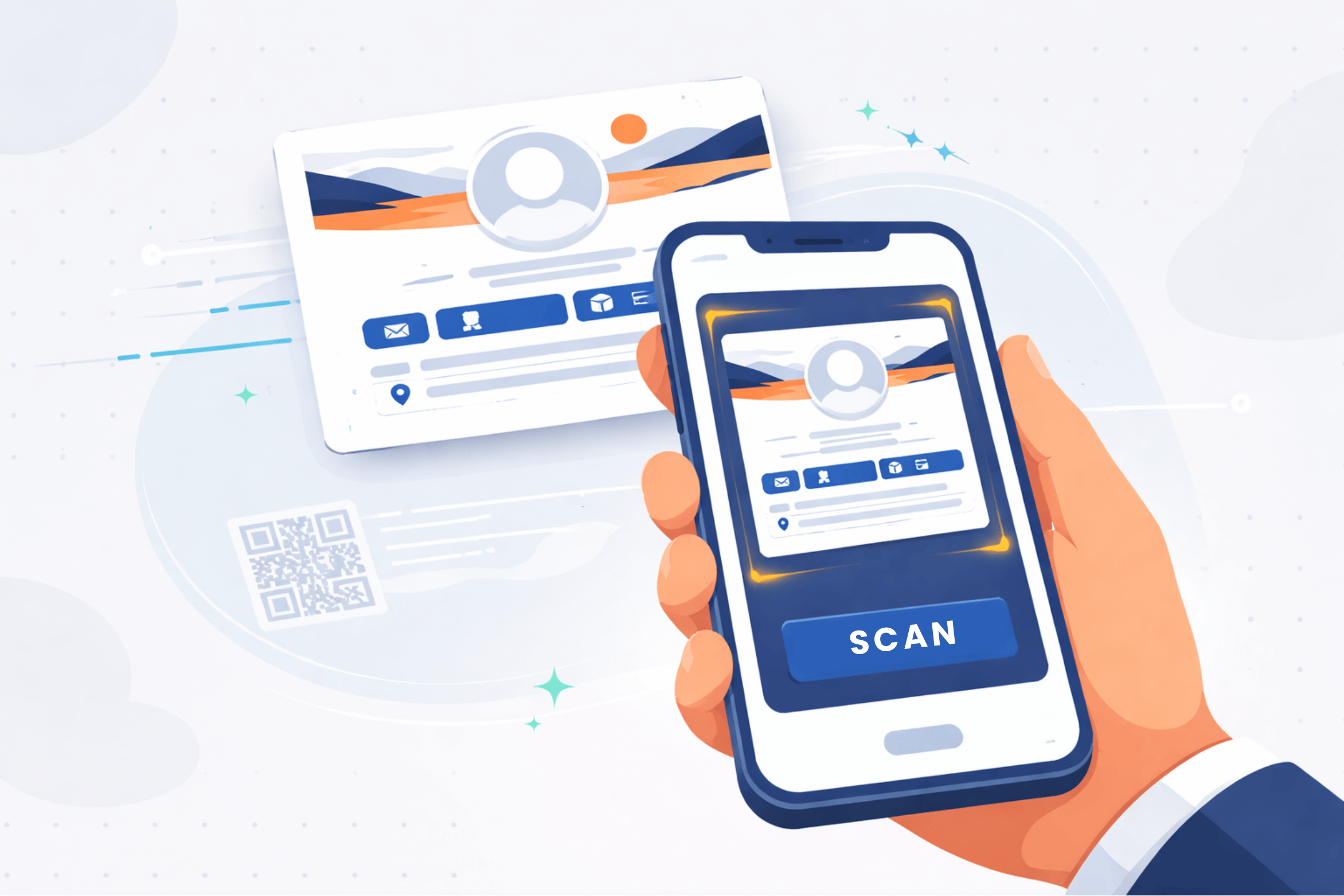
A great digital card makes it easy for people to save you, contact you, book time with you, and share you—without friction.
Clean data imports faster, maps easier, and creates fewer issues later.
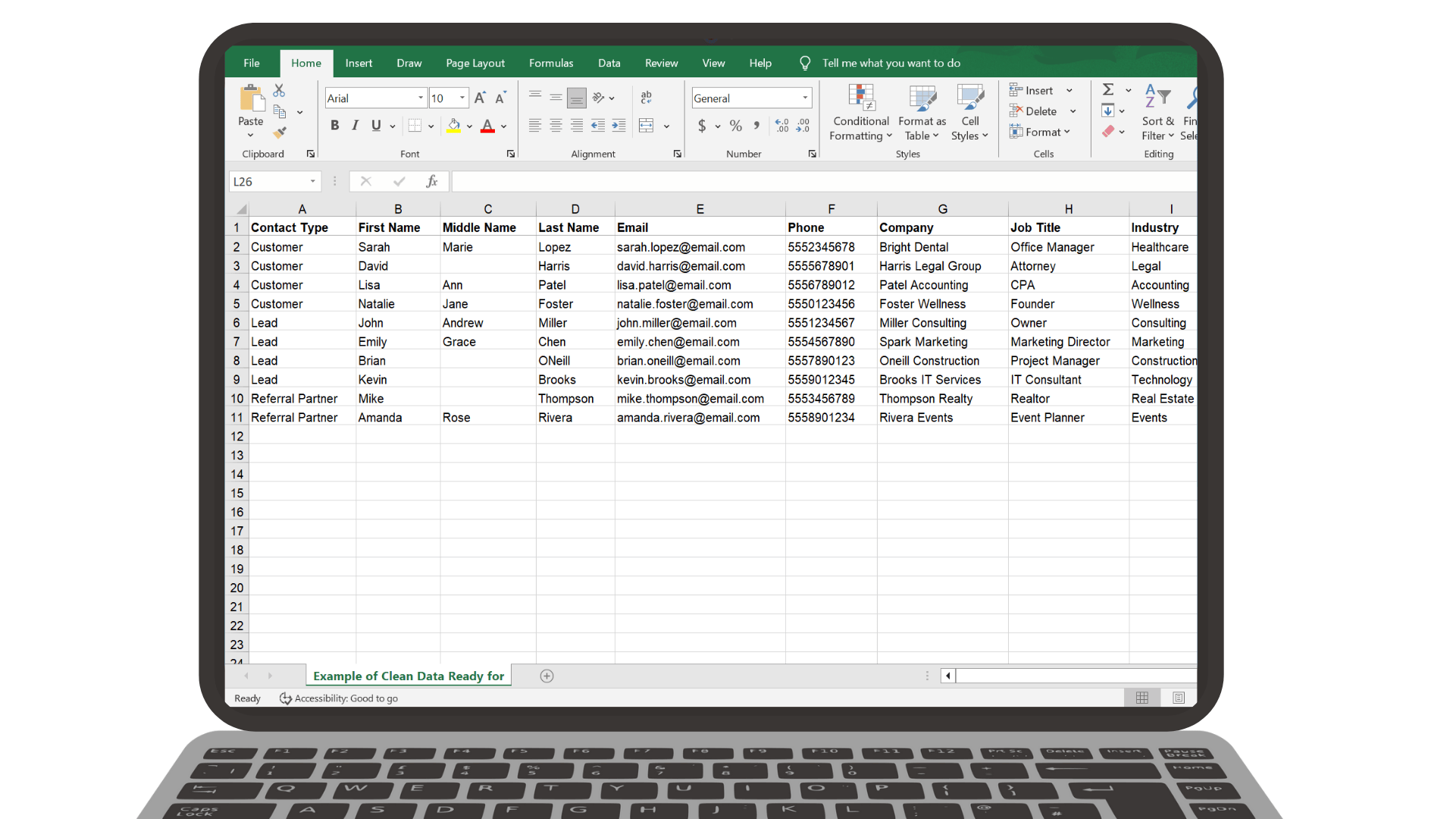
Clean data imports faster, maps easier, and creates fewer issues later.
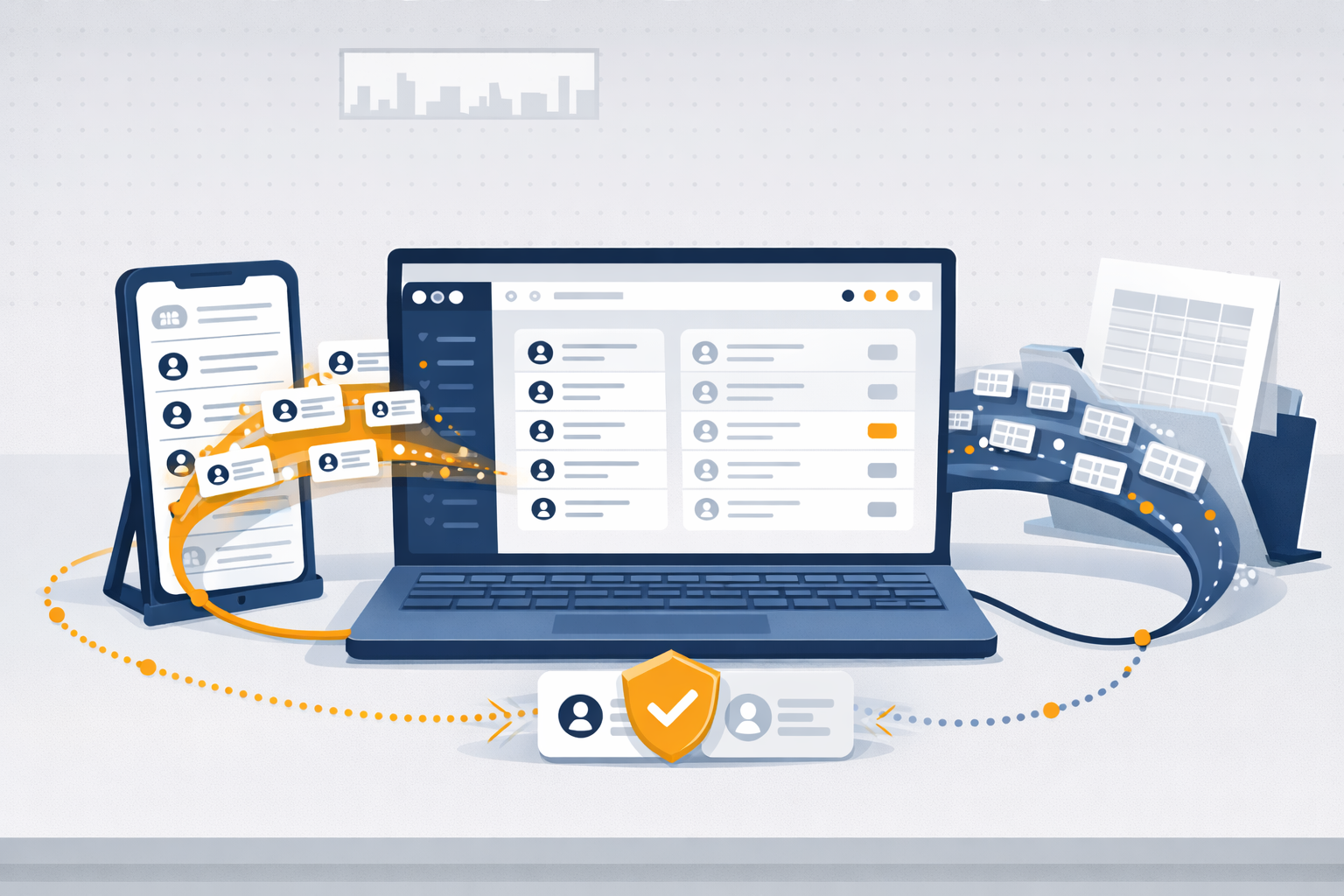
Importing helps you get your existing contacts into Segwik quickly so you can focus on relationships instead of retyping information.
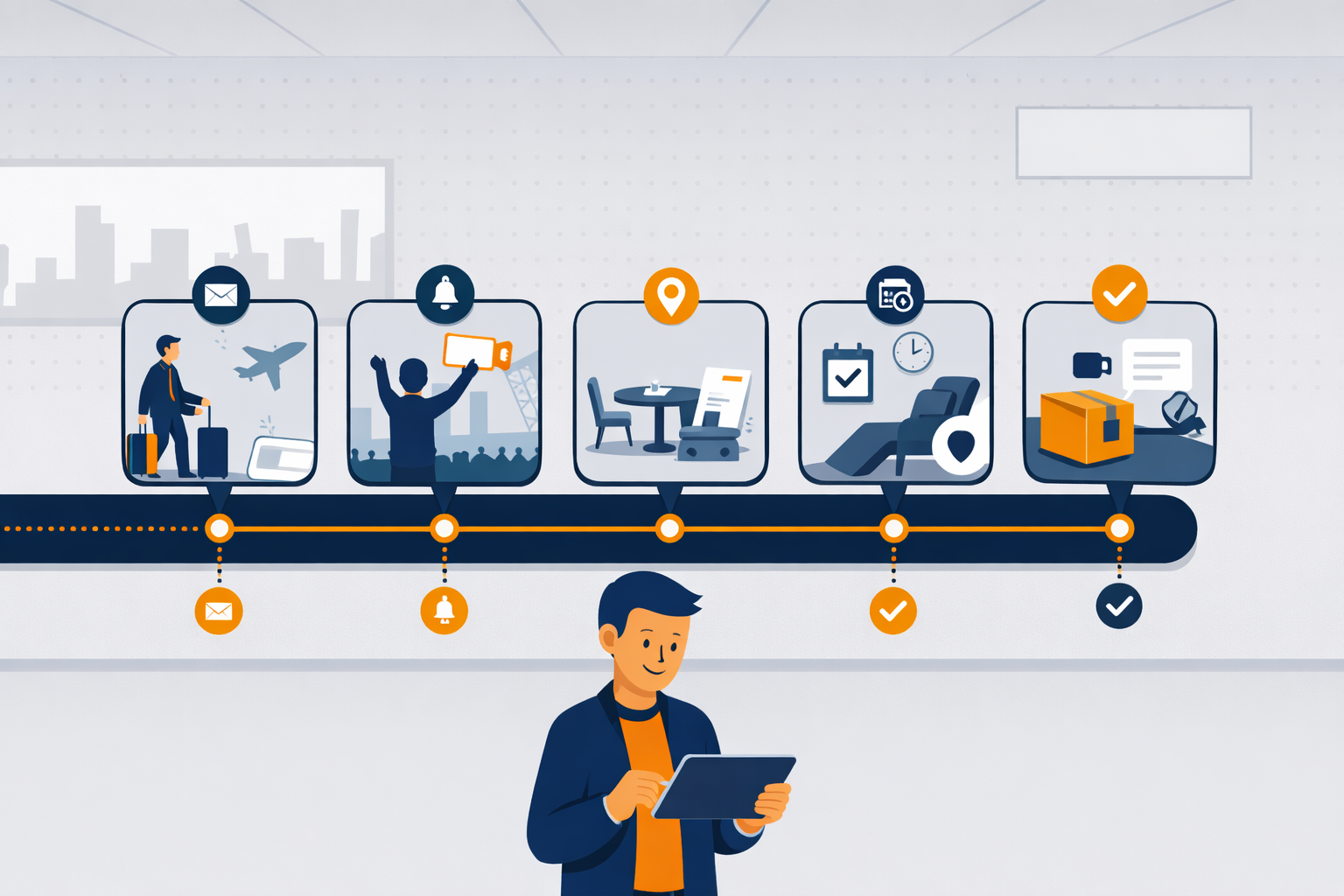
See how familiar experiences like airlines, restaurants, dentists, retail, and online ordering guide people step-by-step — with automation quietly keeping everything on track.